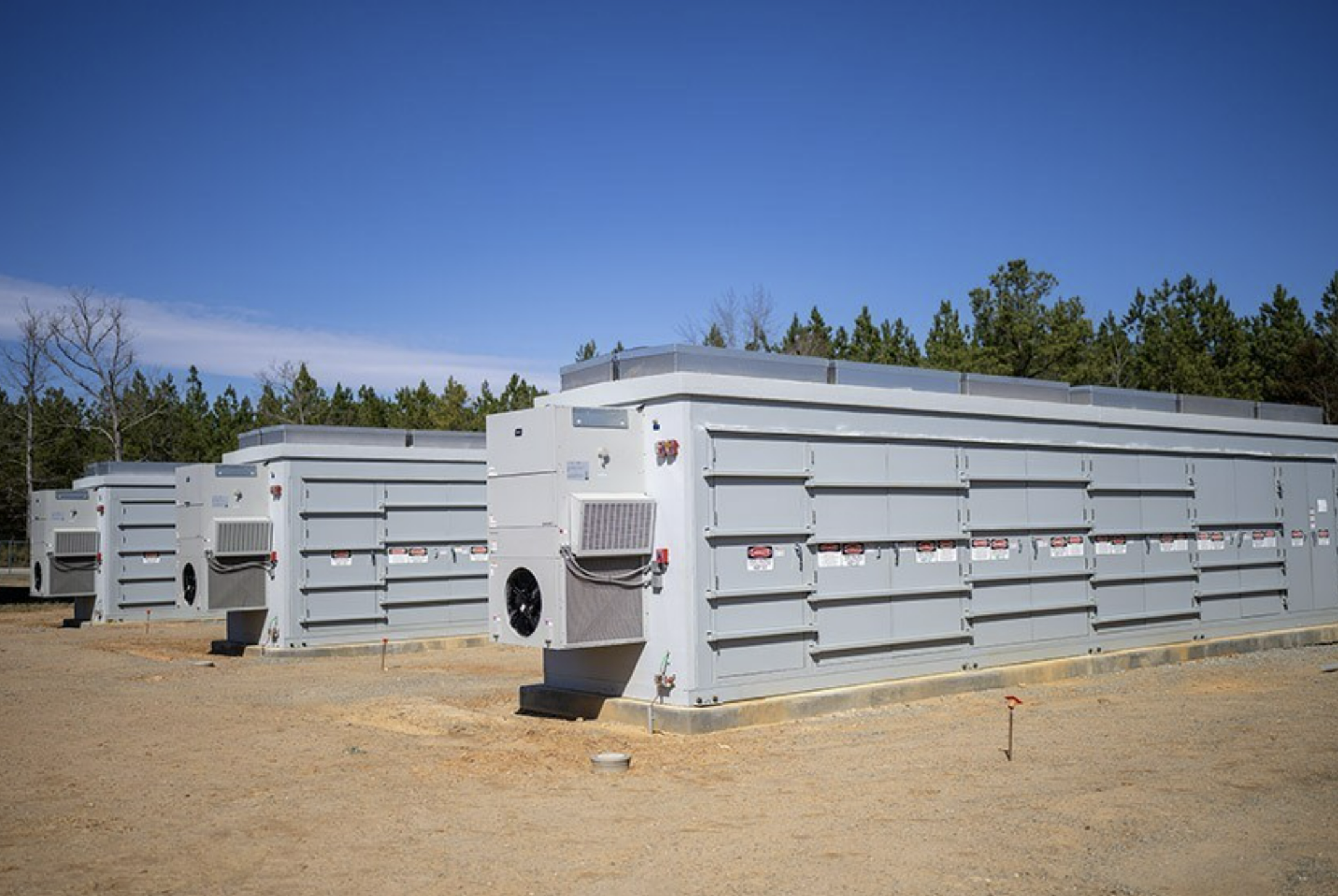
As California has clearly demonstrated in their recent failures to maintain adequate power during the heat wave, solar and wind sources of electricity cannot be ramped up when needed. As a matter of fact, solar output in California actually began falling off at peak demand time. Adequate energy storage is an essential part of planning for a grid that relies significantly on solar and wind.
The grid would have to be designed to best use wind and solar when they're available, and to store the excess when those resources are providing more electricity than needed. This is a fundamental shift from the way most of the system is managed today.
Ninety-eight percent of existing energy storage in California is pumped hydro. The state has seven existing pumped storage facilities with a total capacity of 3,967 MW, including projects at Lake Hodges, Castaic Lake, Helms, San Luis Reservoir, O’Neill Forebay, Big Creek, and Oroville. Nonetheless it was not enough to cover the recent shortfall in power. This is probably because demand was higher than usual due to the heat wave, and California is very dependent on imported power.
Virginia is considering storage as part of the Virginia clean power act which requires Virginia’s two largest energy companies to construct or acquire more than 3,100 megawatts of
additional energy storage capacity. The capacity of power storage is measured in two ways: power capacity and energy capacity. Generation is often characterized in terms of power capacity, which is the maximum amount of power output possible in any instant, measured as megawatts (MW). However, the length of time that a storage system can sustain power output at its maximum discharge rate, typically expressed in hours. The energy capacity of a power storage system is the total amount of energy that can be stored or discharged by the storage system, and is measured in megawatt hours (MWh).

Electric utilities in Virginia are members of an interstate transmission operator known as PJM which provides independent operation of the wholesale bulk power market for our region. This system increases the reliability of the electric grid at the lowest cost by managing regional supply from lowest cost to highest cost to meet demand. Virginia’s retail electric customers are served by three publically traded investor owned utilities (providing 84.1% of electricity used in the state), 13 electric cooperatives (providing 11.5% of electricity) and 16 municipal utilities (providing 4.4% of electricity). Virginia’s utilities own in-state and out-of-state generation facilities, and make contractual purchases of electricity from in-state and out-of-state producers, and spot purchases of electricity from the PJM wholesale market.
According to the EIA, the PMJ currently has 211,680 MW total power capacity, adequate to supply the contract members. There is 278 MW of battery storage capacity and 173 MWh of battery storage power in the system.
However, at this time most storage in the nation is actually hydropower. California, Virginia, and South Carolina account for most of the existing hydroelectric pumped storage capacity in the nation. The largest single facility in the United States was installed in 1985 in Bath County, Virginia, and has a capacity of 3,000 MW. Virginia is also home to the 636 MW Smith Mountain Lake Pumped Storage Hydro and other smaller units.
Grid reliability should not be sacrificed for renewable energy. We must plan for resilience and reliability of our power systems as we make the transition to renewable power.