Showing posts with label water sustainability. Show all posts

Wednesday, May 4, 2022

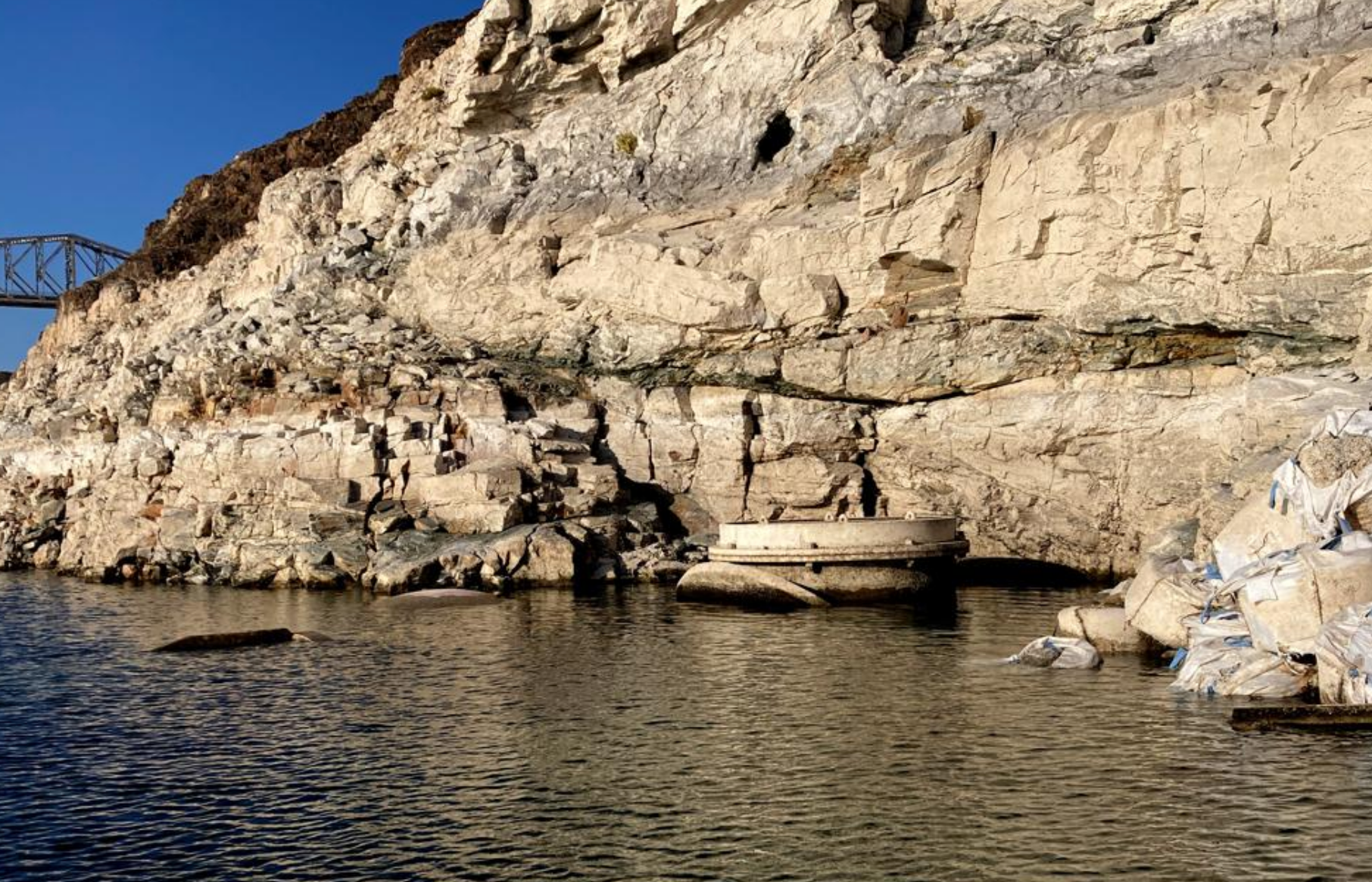
Lake Mead falls below First Water Intake


photo from SNWA 

The Southern Nevada Water Authority announced late last week that after 22 years of drought within the basin, the level of Lake Mead fell below 1,050 feet above sea level. Lake Mead drinking water Intake #1, the topmost pumping station is now above the surface level of the Colorado River reservoir behind Hoover Dam. The intake is the uppermost of three in the lake formed behind the Hoover Dam that provides Las Vegas with 90% of its drinking water supply. 

from Bureau of Reclamation

In their announcement the Southern Nevada Water Authority pointed out that its Low Lake Level Pumping Station #3 installed in anticipation of this happening is operational. Southern Nevada Water Authority constructed the third drinking water intake capable of drawing Colorado River water at lake Mead at elevations below 1,000 feet. Intake #3 ensures Southern Nevada’s access to its primary water supply as lake levels continue to decline due to the drought conditions. The problem is the level of lake Mead keeps falling and despite significant conservation efforts there is no longer enough water to supply the region. There is a time limit on how much longer there will be water.

There has been a drought in the Colorado River Basin for the past 22 years. This combined with higher temperatures has led to what some are calling aridification of the region. Lake Mead has seen more than 130-foot drop in the water level since the turn of the century. The annual flow of the Colorado River is estimated to have fallen about 20% in the 21st Century compared to the 20th Century due to both rising temperatures and drought. The region is in trouble.

from SNWA

The 1922 Colorado River Compact, negotiated by the seven basin states (Colorado, Nevada, Utah, New Mexico, Wyoming, Arizona, California) divided the Colorado River basin into upper and lower portions, allotted the Colorado River’s water on the basis of territory. The allocation of water rights based on territory allowed development to proceed in the lower basin (essentially California) while safeguarding supplies for the upper basin. Then, as now, California's growth and demand for water was viewed with concern by her neighbors.

The problem now is that the allocations promised under the Colorado Compact was based on an expectation that the river's average flow was 16.4 million acre feet per year  and ignored the needs of nature and the tribes. Subsequent studies: however, have concluded that the long-term average water flow of the Colorado is less. In addition, according to the University of Arizona, records going back to paleolithic times (more than 10,000 years ago) indicates periods of mega-droughts in the distant past. 

Now with more than twenty dry years, the reservoirs have dwindled to their lowest levels recorded. Allotted shares of water in the basin exceeds the average long-term (1906 through 2018) historical natural flow of under 16.0 million acre-feet. To date, the imbalance has been managed, and demands largely met by slowly using up the considerable amount of reservoir storage capacity in the Colorado River system-  Lake Powell and Lake Mead that once held approximately 60 million acre-feet (nearly 4 years of average natural flow of the river). It was assumed that drought years would be followed by wet year to refill the reservoirs. That has not happened recently, the last time the reservoirs filled was 1983. The basin is in its 22nd year of drought and the true existential crisis for Las Vegas looms just over the horizon. For without water there is no life.

Sunday, October 11, 2020

The Potomac River May Run Out of Water

 This is a summary of the ICPRB report published September 2020:

The Washington, DC, metropolitan area (WMA) with over three million workers many of whom serve or support the federal government  is also home to almost five million residents. The region’s water suppliers have an important responsibility beyond supplying the needs or the residents: to provide 24/7 water that ensures the federal government, including Congress, the Pentagon, and key agencies can function.  

The water suppliers share the Potomac River as the major regional water resource, and so 35 years ago and came together to form the Interstate Commission on the Potomac River Basin (ICPRB) and a cooperative agreement (Co-Op)  of funding and using the water resources available regionally. One of the requirements of the agreement is that every five years a study be conducted to evaluate whether available resources will be able to meet forecasted water demands. The seventh in the series of such studies has just been released.  This time the ICPRB found that if droughts become much more severe as predicted in the climate forecast, even with the addition of the Vulcan Quarry, Milston Quarry, Travilah Quarry and Luck Stone Quarry B as reservoirs (adding over 13 billion gallons of water storage) and using water restrictions and demand management the WMA water supply may be unable to meet combined water supply needs and the environmental flow-by at Little Falls. In other words according to the forecast by 2050 we run out of water for periods under more than one third of the forecast scenarios. It is to be noted that without the addition of the 7.8 billion gallon Travilah Quarry as additional storage the WMA water systems experience failures by 2040 in the forecasts.

The new ICPRB study forecasts of water demands for the WMA through, 2050, taking into account projected demographic and societal changes that may affect future water use,  forecasts of water availability, considering the potential impact of changes in climate and upstream water use on system resources, and  an evaluation of the ability of current and planned system resources to meet the forecasted demands. Using various scenarios the  current study also assesses the effectiveness of several options for enhancing the current regional water supply system that were recommended in a special study conducted in 2017 (Schultz et al., 2017). This special study evaluated and compared the ability of 10 proposed changes and additions to the WMA water supply system to meet the challenges of growing regional demand for water with a supply that does not grow and the potential impacts of climate change when the region expects to have more intense wet years and longer droughts.

The Potomac River supplies, on average, just over three quarters of the WMA’s surface water needs. The rest of the water supply comes from Occoquan River, the Patuxent River and regional groundwater supplies an estimated 27% of end use demand. The Co-Op members provided the funding for three upstream reservoirs: Jennings Randolph, Little Seneca, and Savage. Water in these reservoirs is released during drought to augment natural river flow. In addition, Fairfax Water and WSSC Water rely daily on reservoirs outside of the drainage area of the Potomac River, on the Occoquan River (7.85 billion gallons) and the Patuxent River (10.4 billion gallons), respectively. Two additional reservoirs are planned to be in place within the next 20 years: Loudoun Water’s Milestone Reservoir(1.25 billion gallons)  , scheduled for completion in 2024, and Fairfax Water’s Vulcan Quarry Phase 1 (1.7 billion gallons), planned to be in place by 2040 to augment their Occoquan supply.

Due to continuing improvements in efficiencies of household water fixtures and appliances and consumer behavior, water use in the WMA has remained remarkably steady for almost three decades despite continuing population growth. Water demand averaged 453 million gallons per day (MGD) for the CO-OP suppliers during the most recent period for which data is available (2014-2018). This does not count the water use from groundwater nor the water use by smaller water supply utilities that have their own water supply. Forecasts of average annual water demand were developed using average per person and household use and a forecast that population in the WMA in 2050 will be 6.1 million, a 27% increase from 2018 levels. The ICPRB projects that average annual  water demand will increase to 501 MGD (10%) by 2040 and to 528 MGD (16%) by 2050. The estimated uncertainties (one standard error) in 2040 and 2050 are ±9.7% and ±10.4%, respectively.

While the demand for water increases, the climate projections indicate that the mid-Atlantic states, on average, are becoming and will continue to get “wetter.” Climate scientists also warn; however,  that extreme conditions, that is, floods and droughts, will become more severe.  Our water infrastructure will have to include more water storage to meet a larger demand during longer droughts.

The ICPRB used nine scenarios to represent ranges of uncertainties in the impact of climate change on water availability in the Potomac basin and in future WMA water demand. For each scenario, Potomac Reservoir and River Simulation Model (PRRISM) simulations were done in  four different configurations of the WMA system: a system with current and planned resources, and a system that has been enhanced with  operation controls using water restrictions,  the current system with operating controls and the Travilah Quarry and finally the current system with operation controls the Travilah Quarry and Luck Stone Quarry B added storage.

On average, precipitation in the Potomac River watershed in 2040 and 2050 is projected to increase by 8% and 10%, respectively, and temperature is projected to increase by 2.16 °C (3.9 °F) and 2.5 °C (4.5 °F), respectively. There is tremendous uncertainty about how climate change will affect streamflows. This study relies on a simple climate response function, based on a least squares multiple regression analysis, to predict mean annual natural Potomac River flow from mean annual precipitation, mean annual temperature, and the previous year’s mean flow.

Four summary statistics are used as key performance metrics are listed in the colored boxes below:

  • Percent years with no Potomac flow deficits: the percentage of years in the simulation period in which flow in the Potomac River at Little Falls is above 100 MGD (the Little Falls flow-by) on every day of the year, that is, in which combined WMA Potomac water supply needs and the environmental flow-by at Little Falls is always met.
  • Percent years with emergency restrictions: the percentage of years over the simulation period in which emergency water use restrictions are implemented on one or more days of the year. In this study, emergency restrictions are assumed to be implemented when combined water supply storage in Jennings Randolph and Little Seneca reservoirs is below 5% of the combined capacity.
  • Maximum 1-day Potomac flow deficit (MGD): the maximum shortfall in meeting combined WMA Potomac water supply needs and the Little Falls environmental flow-by on any single day of the simulation period.
  • Minimum Travilah Quarry storage (BG): the minimum storage in Travilah experienced over the course of the simulation period.

The last statistic, minimum Travilah Quarry storage, is of interest because of the dual role that Travilah is expected to play in the WMA water supply system: as a backup supply in case of an emergency spill and as a resource to mitigate drought. Reductions in Travilah storage during drought reduce or eliminate this reservoir’s ability to serve as a backup supply in case of a spill. Results of the study indicate that if droughts become much more severe as climate models forecast, the WMA system may be unable to meet combined water supply needs and the environmental flow-by at Little Falls even if all of the recommended options of the 2017 alternatives study are implemented, including Travilah Quarry and Luck Stone Quarry B. 


The Charts show: Percent years with no Potomac River deficits, Percent years with emergency restrictions, Maximum 1-day Potomac River flow deficit, Minimum Travilah Quarry storage top to bottom in each box.

Thursday, November 17, 2016

Lorton Quarry to Become Reservoir


At the end of October William Duke, President of Vulcan Materials Mideast Division, and Philip Allin, Chairman of Fairfax Water signed an agreement at a ceremony at the Griffith Water Treatment Plant in Lorton that sets the conditions for the transformation of a rock quarry into a water storage reservoir in southeastern Fairfax County.
from Google Maps

The Quarry will be converted to a reservoir in phases and continue to operate during phase 1 which will convert a portion of the quarry to a reservoir with storage of of about 1.8 billion gallons by 2035. Quarry operations will end with Phase II which will convert the remaining area to Fairfax Water reservoir with storage capacity of up to 15 billion gallons by 2085. To do this the existing quarry will be reconfigured to mine portions of Fairfax Water’s property. This will allow Vulcan to leave a “rock wall” that will segregate the quarry into the two parts. The two-reservoir Quarry reconfiguration addresses the water supply need projected to occur in the 2035-2040 timeframe.
from Fairfax Water

The Vulcan Quarry was identified as the favored alternative for meeting future water needs in the Northern Virginia Regional Water Supply Plan in 2011 and adopted by Fairfax County in early 2012. This new reservoir will be used to supplement water supply to accommodate population growth in Northern Virginia and ensure that Fairfax Water can continue to provide reliable, high-quality drinking water well into the future. 

Fairfax Water projects water need based on the most recent population and employee projections available from the Metropolitan Washington Council of Governments. Today, Fairfax Water serves nearly 2 million residents and more than 800,000 employees in Northern Virginia. Between 2010 and 2040, the population served by Fairfax Water, including wholesale customers, other communities that buy their water from Fairfax Water, is projected to increase by over 650,000 residents and nearly 550,000 employees. Fairfax Water needs to plan to reliably provide water to all.

All the regional water supply companies share the water resources of the Potomac. Fairfax Water, the Washington Aqueduct (WA) of the U.S. Army Corps of Engineers, and the Washington Suburban Sanitary Commission (WSSC), and the Interstate Commission on the Potomac River Basin (ICPRB) signed the Water Supply Coordination Agreement that established a framework for water supply planning, drought management, and resource optimization on the Potomac River back in 1982 and have worked together to manage the regional water resources since.

Every five years, the ICPRB conducts a study of projected demand and available water supply resources based on the best available information at the time- utilizes water use and demographic data along with assumptions regarding changes in water use patterns in the region. These are not certain. The ICPRB 2015 report assumes daily per capita water use will decrease by an additional 25%, incorporates various climate and weather scenarios and uses the projection of population growth provided by the Washington Council of Governments who forecast that the residential population is expected to grow by 23% and the workforce is expected to grow by 36% by 2040. They also looked carefully at the impact the climate change might have on water supply.


Historically, a key assumption was that the future flow of the Potomac River will mirror the hydraulic conditions for the past 79 years. If hydraulic conditions are changing or a 79 year period is inadequate to predict the possible extent of droughts, this could impact the availability of water. So, a couple of years ago the ICPRB engaged a study that created a model for various climate scenarios of water supply availability from Potomac Watershed to determine if the water supply would be adequate to serve the population. They used this model to examine the water supply adequacy of the current study.

The ICPRB found that the existing water supplies can meet demands of the forecasted population levels through the Year 2035, by implementing mandatory water restrictions during severe droughts. However, as the population and water demand continue to grow the current supply system including the Potomac River and all current and planned reservoirs and water storage would not be adequate to supply all needs during a severe drought even after using all the reservoirs to supplement flow and implementing water use restrictions.

This is why Fairfax Water has worked with Vulcan to develop the “two reservoir Quarry reconfiguration”, to provide interim water supply storage in 2035, as well as a significantly larger storage facility beyond 2085. With the delivery of the Northern Reservoir in 2035, Fairfax Water will be able to expand the Griffith Plant to 160 million gallons a day.  The Northern Reservoir will also provide an emergency source of supply to the Griffith water treatment plant when emergencies like chemical spills restrict the larger and newer Corbalis plant’s access to the Potomac River. This happened last year when Fairfax Water had to shut their intake to let a plume of contamination pass. 


Thursday, April 14, 2016

The White House Turns To Water Sustainability

The water on earth arrived 4-5 billion years ago, and is all the water that ever was or will be on earth. More than 97% of the Earth’s water lies within the oceans. The remaining 2.8% is the water within the land masses- lakes, rivers and groundwater. The land masses contain all the fresh water on the planet. Most of that freshwater is contained in icecaps and glaciers (for now). The remaining fresh water is stored primarily in the subsurface as ground water and a lesser amount is stored in lakes and flows as rivers which are renewed by rainfall.

For more than 4 billion years, the original water in the atmosphere has fallen back to the surface as raindrops or snow, flowed into streams and rivers and on to the oceans, then evaporated when heated by the sun and formed into clouds in the sky. The water on earth never rests, it is constantly moving within the complex pathways of the hydrologic cycle and over a wide variety of time scales. Water moves quickly through some pathways -rain falling in summer may return to the atmosphere in a matter of hours or days by evaporation. Water may travel through other pathways for years, decades, centuries, or more by being absorbed into the ground and percolating below to be trapped in bedrock as groundwater.

The water molecules in our glass of drinking water have traveled through the air, ground, streams, and oceans over and over again in the billions of years since the earth formed. The water has absorbed various particles in the journey beyond the H2O molecules themselves. In every cup of water that we drink are H2O molecules that have previously traveled the earth and through the intestines of countless generations of fish, birds and mammals, yet the water remained fresh and clean.

The processes of nature sterilizes water and prepares it for reuse. When water droplets are evaporated by exposure to ultraviolet rays of the sun, or high levels of oxygen when flowing roughly down waterfalls bacteria and viruses are degraded or destroyed and most biological contaminants are removed during the journey.When plant roots absorb nutrients and H2O molecules the water is transported to the leaves and evaporated back into the atmosphere. "Transpiration" moves H2O molecules from liquid to vapor form, and sterilizes the water in the process. Transpiration removes water from soil and streams, and releases it as water vapor in the atmosphere.

When our nation was occupied by few hunter gatherers, population levels were very low. Water contamination by their human wastes were not a major health issue because the natural processes were adequate and wildlife in natural areas would rarely be concentrated enough to create sufficient waste to affect water quality in the east. (The environmental impact of the vast herds of buffalo are for a different discussion.) As water flowed to natural streams, exposure to sunlight/oxygen soon killed most harmful bacteria and viruses excreted by wildlife. Water was abundant.

Water is precious and for too long we have taken it for granted and assumed it should be cheap. Today many once-natural areas have been developed as farms, towns, suburbs and cities. The human population has grown so large and humans are concentrated in such density that natural processes cannot clean our wastewater before the next community downstream plans to use it for drinking water. We now treat our waste water and drinking water to remove contaminants, but we create contaminants faster than we remove them. We have created chemicals to spray on our land, rinse down the drain, flush down the toilet and dump into our rivers; and our suburban communities are exacerbating "natural" wildlife pollution, by removing massive amounts of natural habitat and concentration the wildlife populations in narrow strips of land. Water pollution is a modern phenomenon created by mankind and we excel at it.

Not only are we contaminating water, but we are over using it. The earth has a fixed amount of water and only a tiny fraction is available fresh water, and availability is complicated by the variability in weather and the variable length of different parts of the water cycle. Precipitation does not fall in the same amounts throughout the world, in a country, or even a region and varies from year to year. Nonetheless two Dutch scientists in a well-known study estimated the consumptive use of water for agriculture, and estimated that over 90% of water used globally is consumed by crops and agriculture in general. Mankind’s demand for fresh water is predominately for food and we are on a trajectory towards running out of both.

Communities and regions across the United States are facing water challenges impacting millions of lives and the will cost billions of dollars to address.. Last month in conjunction with the United Nations World Water Day, the White House hosted a Water Summit to raise awareness of water issues and potential solutions in the United States. This was done in the shadow of the recent events, including record-breaking drought in the West, severe flooding in the Southeast, and the water-quality crisis in Flint, Michigan. Our water infrastrcture is falling apart, our water supplies are being contaminated, over used and falling. The White House Summit was a beginning of the process of building consensus, of catalyzing ideas and actions to help build a sustainable and secure water future through innovative science and technology.

While water availability, sustainability and quality are issues almost everywhere in our nation (and for that matter in the world), the solutions are very local. The White House Proposed solutions are mostly tilted towards forecasting, monitoring and addressing drought. Drought is only one problem. The others are managing our water resources sustainably - ensuring that we do not use up our groundwater; and making sure that our drinking water is clean and uncontaminated. The solutions for Flint, Michigan, our own Washington Metropolitan area and Los Angelis are very different. Only the need for political will and money are the same.

The Washington Metropolitan area is fortunate to have the Interstate Commission on the Potomac River Basin, ICPRB, which was authorized by congress in 1940 to address the pollution of the river. In response to the droughts of the 1960’s and 1970’s the ICPRB facilitated the creation of the Potomac River Low Flow Allocation Agreement in 1978. The ICPRB has been able to coordinate all the political entities, Maryland, Virginia, Fairfax Water, Washington DC, the federal government and counties and cities within the watershed to address the basin’s major challenges, including water quality impairments, water supply and restrictions, flooding, nonpoint source pollution and emerging contaminates. There is one area that has been overlooked- groundwater. The sustainability and protection of groundwater has not been addressed.

Sustainable groundwater use in Virginia is not tracked or managed by DEQ or any other agency for that matter. Groundwater is not unlimited. Our groundwater is at risk. We are fortunate in the water rich climate of our region that the groundwater is being recharged, though the Atlantic Coastal Plain aquifer is under stress and is being used up faster than its recharge rate. This has been confirmed by measurements of groundwater levels, modeling of the aquifer system by the U.S. Geological Survey (USGS) and measurements of changes in gravity by the GRACE satellite project at NASA over the past 12 years of data collecting.

Less is known about the sustainability of the smaller groundwater basins in the region. Our own Culpeper Basin that feeds the private wells in the Rural Crescent of Prince William and areas of Loudoun and Fauquier counties is an example. Use of the aquifer has not been examined. We do not evaluate a development’s impact on groundwater from changes in ground cover by roads and buildings nor look to proposed water withdrawals to determine if a proposed additional use of groundwater is sustainable before it is granted. Our groundwater resources like the waters of the Potomac are not unlimited, and cannot be ignored. The White House has turned toward sustainable water and because water is a local issue we need to turn towards sustainability also.

Thursday, February 21, 2013

Texas Leads the Nation in Water Recycling


The drought burns on in Texas. The state's water plan calls for construction of new reservoirs, desalination plants, pipelines and greater conservation and recycling of water to  make the water supply in Texas sustainable, and Texans are doing it. Direct recycling of wastewater is about to begin in Big Spring, Texas. No other state is taking such bold action to secure their future, but without a reliable potable water supply there is no future. 

The earth has a fixed amount of land and water. All the water that ever was or will be on earth is here right now. More than 97% of the Earth’s water is within the in oceans. The remaining 2.8% is the water within the land masses, as groundwater, rivers, streams, lakes, and within the ice caps and glaciers (over 77% of fresh water is currently frozen and according to climate scientists a significant portion of that may melt). Only a tiny fraction of water falls as rain each year to make the rivers flow, recharge lakes and groundwater. Precipitation does not fall uniformly- there are wet locations and arid locations within a country or region and rainfall varies from year to year and over time as climate changes. Water availability is determined by the weather, climate and the variable length of different parts of the water cycle. Texas has suffered a long drought. 

As the demand for water grows in our population centers, we are straining to meet the demand. Even in generally water rich areas there are limits to the availability of water and United States has slowly and quietly begun to address the availability of water by recycling the water indirectly. In the United States municipal wastewater represents a significant potential source of reclaimed water, an estimated 32 billion gallons of water a day (121 million m3/day) is treated in wastewater treatment plants throughout the country. Currently, National Research Council Water Science & Technology Board estimates that only about 7% to 8 % of this municipal waste water is reused, but a third of this water could be reused.(NRC Water Science & Technology Board titled Water Reuse: Potential for Expanding the Nation’s Water Supply Through Reuse of Municipal Wastewater)

Direct water recycling is reusing treated wastewater for beneficial purposes such as agricultural and landscape irrigation, industrial processes, toilet flushing, and replenishing a ground water basin (referred to as ground water recharge) and less commonly returning the water directly to reservoirs. Many of the existing projects that recycle waste water avoid the negative emotional response of drinking water from wastewater treatment plants by either using the water for irrigation and municipal irrigation (golf courses in Arizona) or by treatment and then supplementing river flow, reservoirs or groundwater.

Since 1978, the upper Occoquan Sewage Authority here in Virginia has been discharging recycled water into a stream above Occoquan Reservoir, one of the two potable water supply sources for Fairfax County, Virginia. Recycled water has been part of the Occoquan supply for 34 years supplying Fairfax, parts of Prince William and Loudoun counties with water. Noman M. Cole, Jr developed the Occoquan Watershed Policy in 1971 that specified the type of waste treatment practices that would  be adopted on a basin-wide scale, and provided for an on-going program of water quality monitoring to measure the success (or failure) of the wastewater treatment. This resulted in the construction of the Upper Occoquan Service Authority, UOSA, advanced wastewater treatment plant with tertiary treatment to replace the eleven small secondary treatment plants and the creation of the Occoquan Watershed Laboratory to monitor water quality.  

For 30 years Los Angeles County has recycled the water from wastewater treatments plants. This water from both secondary and tertiary treated wastewater is discharged into spreading basins to recharge groundwater. Groundwater recharge can be done by surface spreading or direct injection wells. California guidelines recommend spreading over injection because of concerns about water quality and potential health hazards. The groundwater is then mixed with other fresh water supplies for delivery to customers. Many of the existing projects that recycle waste water avoid the negative emotional response of drinking water from wastewater treatment plants (the Toilet to Tap Yuck factor) by either using the water for irrigation and municipal irrigation or by treatment and then supplementing river flow, reservoirs or groundwater.

In Texas they are taking it even further. The population of Texas is expected to double in the next 50 years and several cities in Texas have been forced by the population growth, the extended drought and extreme heat of the past several years to address their water supply and sustainability problems head on. Cities in Texas currently use reclaimed water for power plant cooling, argument stream flow, and to irrigate golf courses and landscapes. Now, the city of Big Spring is the first  in the nation to make the direct leap to piping completely treated wastewater to a drinking water treatment plant. 

The Colorado River Municipal Water District in Big Spring, Texas is finishing construction on a $14 million wastewater recycling plant. Previously, Big Spring discharged its wastewater into a creek, which passed it through a wetland area that processed it naturally, making the wastewater potable again. The water recycling plant will short circuit that process, fully treating the wastewater and produce approximately 1.8 million gallons per day of raw water and piping it directly back into the town's water treatment plant where it will be blended with other raw water from the reservoirs for treatment and distribution.

This is a huge and unprecedented step. The Texas Commission on Environmental Quality and EPA have lagged behind Big Spring, failing to develop guidance regulations on direct water reuse. Texas law strictly prohibits interconnection between reclaimed water and potable water systems, though both Big Spring and Brownwood Texas have received permission to build water reuse plants connected to the water treatment plants. In addition the Texas Commission on Environmental Quality has funded a study to develop a resource document that can assist in planning future direct potable reuse projects in the state. No other community has ever bridged the emotional gap of direct water reuse before and Big Spring will shortly be followed by Brownwood. Texas leads the way into the future.

Thursday, March 15, 2012

Raspberry Falls Bearing the Cost of Water Problems in Karst Terrain

The karst area of Loudoun County is contained within the limestone overlay district that was created in 2010 when Loudoun County Board of Supervisors approved the re-adoption and re-enactment of the Limestone Overlay District (LOD). This district is the area of the county generally north of Leesburg and east of the Catoctin Mountains which is underlain by limestone conglomerate bedrock and runs north along Route 15. The LOD is really an amendment to the zoning to try and address the ecological and environmental challenges associated with karst terrain. The LOD attempts to ensure that the groundwater supply is capable of supporting needs of the eventual inhabitants of new subdivisions and the land can support the septic needs of current and future residents without impacting the water supplies of existing residents and creating sinkholes that could endanger their properties. Karst terrain is fragile and ignoring the limits of natural systems can have serious consequences.

Raspberry Falls is a clustered development around a golf course in the LOD of Loudoun County. While clustered development usually involves fewer disturbances to natural landscape, and is encouraged in low impact development designs, golf courses are not a low impact design feature. The groundwater pumping to feed the homes and water the golf course may create or exacerbate problems in karst terrain, especially during droughts. The turf management herbicides can also be a problem. The Raspberry Falls development was originally approved for 206 homes and currently has, I believe, 134 homes that are served by a community water system consisting of two wells built out by the developer and operated by Loudoun Water. The system has been plagued by the bacterial problems that are a common problem with karst terrain. Fractures in the overlying limestone become enlarged over time and provide a direct route of surface water to groundwater. Sinkholes proved another direct path for surface contaminants to enter the groundwater as do sinking streams and rivers. The faster water moves into the ground the higher the likelihood that bacteria will remain alive and nitrate is not going to denitrify. When that happens the groundwater is deemed to be, Groundwater Under is the Direct Influence of Surface Water or GUDI. A water source is determined to be GUDI if more than 10% of total coliform numbers exceed 100 cfu/100 mL.

One of the water supply wells for Raspberry Falls was determined to be GUDI by the Department of Health and taken out of service and replaced this past year by a new well at a cost of almost a million dollars. Replacing the well solved the problem for the short term, but experience in the western third of Virginia has demonstrated that the GUDI condition could impact the other wells. Local septic systems did not appear to be the source of bacterial contamination, but E coli numbers were not broken out in the raw water data by Loudoun Water, only total coliform. However, wastewater in Raspberry Falls is collected and treated to a at the community wastewater treatment plant (WWTP). Most organic material and nutrients are removed through biological treatment before being disinfected and discharged to an unnamed tributary of Limestone Branch.

Though the GUDI well was replaced with a new well (and right now the water meets all the standards of the Safe Drinking Water Act), additional treatment beyond the current chlorine disinfection of the drinking water is being considered because of the relatively easy connection of surface water to groundwater, the unconfined nature of the groundwater aquifer and probably the immediate problems with turbidity that the new well experienced. Two options were considered and studied by Hazen and Sawyer (Loudoun Water’s consultant): the extension of municipal water from Leesburg into the Rural Policy Area that encompasses Raspberry Falls or the installation of membrane filtration for all Raspberry Falls water supply wells as an additional water treatment step. The extension of the municipal water pipeline would involve an amendment to the Loudoun County Revised General Plan to authorize extending the pipeline and the Town of Leesburg would need to accept ownership and operation of the Raspberry Falls Community Water System.

The costs associated with the installation of membrane filtration and operation were $4 million for purchase and installation and $67,000 additional in annual operation costs for Raspberry Falls only. Loudoun Water estimates that the cost per lot would be an additional $1,830/year for membrane filtration. The Town of Leesburg estimated the construction cost of the pipeline at $7.5-$8 million, with annual operating costs of $418,000 and an annual cost per lot of $4,260/year. The recent water rate increase does not take into consideration either of the options under consideration. The membrane filtration was the cheaper option, and would still carry significant costs that would ultimately be paid for by the water system customers. Loudoun Water appears to prefer the cheaper membrane filtration system, and though residents might suspect business concerns took precedence over water quality issues, it may be an excellent solution given what is known about the source water quality. Loudoun Water has requested that Loudoun County and the Town of Leesburg decide whether to pursue the pipeline extension no later than May 2012 otherwise they will proceed with installation of membrane filtration at Raspberry Falls.

There appears to be many residents who strongly support the pipeline/ Leesburg water solution despite the higher cost. Appropriately, many residents are only concerned about obtaining the best water supply possible, but the pipeline may not be that answer. Personally, after reviewing the US Geological Service (USGS) raw water studies and the USGS and US Fish and Wildlife (USFW) studies into skin lesion on bass in the southern branch of the Potomac River, I would hesitate to pay extra to drink water sourced from the Potomac River without advanced nanomembrane filtration. The USGS found fish suffering from a variety of lesions. Some fish had bacterial lesions, some fungal lesions, and some fish had parasite. The USGS concluded that there was no specific cause of the lesions and that the fish appeared to be immunosuppressed so that any pathogen in the water could attack the fish. A series of studies were performed over a period of years. During the investigation it was discovered that male fish had immature female egg cells in their testes and the females had lowered levels of an essential protein in the formation of eggs. The bass suffering from lesions were intersexed.

It had previously been demonstrated that estrogen and estrogen mimicking compounds can cause intersex. The occurrence of intersex among the lesioned fish prompted further studies. The study found the problem of endocrine disruption in fish to be widespread in the limited study area of a portion of the Chesapeake Water Shed and Potomac River, but increased in proximity to and downstream of the waste water treatment plants. Chemical sampling that took place along with the fish sampling found higher concentrations of waste water chemicals near the waste water plants. Pesticides, herbicides and their breakdown products currently used in agriculture were detected at all locations. Hormones were not detected in the samples, but analysis using yeast screening assays found estrogenic endocrine-disrupting chemicals at all locations their specific source is not yet known. None of these chemicals are currently regulated under the Safe Drinking Water Act, SDWA, and so would not be tested for or treated by the Leesburg town water treatment system except by happy coincidence.

Before the residents of Raspberry Falls choose a solution to their water problems they should consider carefully the quality of the source water and finished water. USGS groundwater source studies have also found the presence of the gasoline additive MTBE, the solvent 1,1-dichloroethane, and the herbicide breakdown products from alachlor and atrazine in a significant percentage of groundwater supply wells in unconfined aquifers. The herbicide degradates are not regulated by the USEPA in drinking water under the SDWA, so these contaminants are not tested for in drinking water and there are no known health screening levels. Though these herbicides are widely used in agriculture and turf management for golf courses and the herbicide degradates may be regulated by USEPA under the Federal Insecticide, Fungicide, and Rodenticide Act (FIFRA). Though whatever solution Loudoun County Supervisors and the residents of Raspberry Falls choose will have additional costs associated with it, this is a rare opportunity to select your source water and potentially your treatment method after purchasing your home. Performing extensive source and finished water analysis before making a final decision might be very worthwhile in this instance.

Monday, September 19, 2011

Water the Worlds Most Valuable Resource

While many were focusing on energy use, carbon emissions, and climate change and buying carbon offsets, I was trying to secure a sustainable water supply. Global fresh water supply poses the real and immediate environmental risk.

According to the US Census Bureau there are 312 million people in the United States and almost 9 billion people on earth. All the water that exists on the planet is finite and always part of the water cycle or hydrologic cycle, the continuous movement of water on, above, and below the surface of the Earth. Since the water cycle is truly a "cycle," there is no beginning or end. More than 96% of Earth's water exists in the oceans where the sun, which drives the water cycle, heats water. Some of it evaporates as vapor into the air. Ice and snow can sublimate directly into water vapor. Rising air currents take the vapor up into the atmosphere, along with water from evapotranspiration, which is water transpired from plants and evaporated from the soil. The vapor rises into the air where cooler temperatures cause it to condense into clouds. Air currents move clouds around the globe, cloud particles collide, grow, and fall out of the sky as precipitation. Some precipitation falls as snow and can accumulate as ice caps and glaciers, which can store frozen water for thousands of years. Snowpacks in warmer climates often thaw and melt when spring arrives, and the melted water flows overland as snowmelt. Water is not created, it changes states, it changes locations, but it is finite.

The fresh water on the planet is stored in the glaciers (that are reported to be melting), groundwater, rivers and streams all which can be polluted. Groundwater, river and streams are recharged by precipitation. Most precipitation falls back into the oceans, but some falls onto land, where the precipitation flows over the ground as surface runoff. A portion of runoff enters rivers which all flow towards the oceans. Runoff, and ground-water seepage, accumulate and are stored as freshwater in lakes. Not all runoff flows into rivers, though. Much of it soaks into the ground as infiltration. Some water infiltrates deep into the ground and replenishes aquifers (saturated subsurface rock), which store huge amounts of freshwater for long periods of time. Some infiltration stays close to the land surface and can seep back into surface-water bodies (and the ocean) as ground-water discharge, and some ground water finds openings in the land surface and emerges as freshwater springs. Over time, all of this water keeps moving and is truely the flow of life on our planet.

As global population rises, the demand for fresh water rises for drinking, domestic use, for industry and for agriculture. The demand for food and the water that is essential to produces it grows with population and wealth. Globally, farming is estimated to account for 60% -70% of fresh water use. Irrigated agricultural is the largest consumer of water on the planet. With population growth and increase in wealth it is projected that agricultural consumption of water will increase, although its consumption growth is forecast to be slowed by more efficient water usage in the future, nonetheless, it was estimated that the water usage would grow by a third between 2000 and 2050. While there might be adequate fresh water on the planet to meet this, the available fresh water is not located where it is needed.

Irrigation has vastly improved crop yields in many semi-arid climates where the growing season is long and crop yields seem only to be limited by water availability. The development of irrigated agriculture was the first step in increasing human population. Irrigated agricultural land is two and a half times more productive than rain fed agricultural land and the limits of irrigation really are the fresh water resources, the capital costs and the saline buildup over time in the farm land and aquifers. Over 40% of the global food harvest now comes from the 17% of the world's croplands that are irrigated. More successful agriculture has allowed a larger and larger portion of the population to pursue activities beyond the direct production of food.

Social scientists and demographers predict that 70% of the world’s population will live in urban areas by 2050. Today there are reported to be 3.5 billion people living in urban areas, about half of the world’s population; however, much of this is due to urban migration because humans do not breed in captivity. In the United States in 2011 just under 80% of the population lives in urban areas many of modest size. http://www.fhwa.dot.gov/planning/census_issues/metropolitan_planning/cps2k.cfm
http://www.census.gov/population/censusdata/urpop0090.txt
In the nineteenth century, the world’s most populous city was London whose population in 1900 was 7 million, today London has 9 million citizens and has been eclipsed by emerging countries of China, India and even Mexico. Shanghai has15 million people, Delhi has 16 million people and Mexico City has 20 million people. Fresh and safe water supplies are becoming critical in these new world urban centers.

To survive the average adult needs between 0.75 and 2.25 gallons of water daily, depending on climate, activity, and size. However, the production of foodstuffs involves much greater consumption of water environmental scientists estimate that, for an average vegetarian diet, 95,000 gallons of water per capita per year is needed or irrigation or rainfall. So, the annual drinking water consumption of even the thirstiest vegetarian would still represent just 1% of the water required for the cultivation of their food. Animals like humans require massive quantities of water to grow, so that an animal protein based diet requires multiples of the water used in a vegetarian diet.

Drinking water and food are basic human requirements. Other needs include personal hygiene, cooking and cleaning. The World Health Organization considers that a minimum 8-13 gallons per day is necessary for keeping up basic personal hygiene, for cooking, and for cleaning. This amount (which does not include water for flushing toilets), plus the amount consumed as drinking water, has been labeled the “basic water requirement.” Rounding, the basic requirement is 15 gallons a day. http://https://www.citigroupgeo.com/pdf/SGL72074.pdf

Of course, most humans aspire to more than just basic survival and few of us in the “first world” would be willing to live at the survival level when it comes to food and water and continue to work and produce at our current level of production. On that point, although per capita meat consumption in developing countries is still less than half the levels of developed countries as incomes rise so does meat consumption. As noted above, 95,000 gallons of water per capita per year is needed for an average vegetarian diet; a diet containing 20% meat triples that consumption (reflecting water consumed directly by animals, and water used in the production of food for livestock).

Water is used for activities beyond basic personal hygiene. Activities such as flushing a toilet, watering flowers, or washing a car increase daily per capita water needs by 8-26 gallons. Hospitals, restaurants, hotels, schools, office buildings and other institutions use considerable amounts of water either directly or in the form of energy consumption. The actual numbers vary from 5.5 gallons per capita per day in Africa, to 26.5 gallons per capita per day in Europe, and over 100 gallons per capita in North America. Though we think of North America as the home of the ornamental lawn, the truth is that approximately 80% of North America’s gross water use, the total volume withdrawn from water bodies, goes to energy, natural resources and food. The thermal power generating sector is responsible for the greatest gross water use, while agriculture accounted for the majority of consumptive water use (water not returned to a water body after use).

As the world population grows the excess capacity of water necessary to have adequate food for areas of the earth experiencing drought, flooding or natural disasters shrinks. As all civilizations have in the past our intermingled world civilization will grow to the breaking point. Technology has allowed us to surpass the limits of previous civilizations, but we are still limited by water and our ability to increase our water efficiency.
Monday, August 22, 2011

Depleting our Groundwater Supplies


Whenever you pump water from a well it has to be balanced by a loss of water from storage in the groundwater aquifer. Groundwater is recharged from rain and sources of surface infiltration. The response of a groundwater aquifer to pumping depends on whether the aquifer is confined or unconfined, how much water is pumped and the geology of the area. If too much water is pumped, water tables can drop in unconfined aquifers, water pressure fall in confined aquifers, surface water and ecology could be impacted and in some locations with fine grained soils compaction and subsidence can take place. The U.S. Geological Survey’s (USGS) Groundwater Resources Program is conducting large-scale multiyear regional studies of groundwater availability in the United States. The USGS has found that the volume of groundwater stored in the earth is decreasing in many regions of the United States. The water level is falling in many areas and if this continues we could deplete our groundwater. The extent of groundwater level declines across the United States has not been monitored before now. The most recent effort to summarize the declines in artesian water levels or water tables was in 1983. Since that time our demands on the groundwater have increased and our understanding of groundwater has improved. It is now very clear we are running a groundwater deficit.
http://pubs.usgs.gov/circ/1323/pdf/Circular1323_book_508.pdf

Although humans have been digging wells and tunnels for water supply for thousands of years, extensive use of ground water is relatively recent, and coincides with more effective drilling and pumping technologies during the past 75 years. The USGS is trying to determine how much ground water we have, how fast groundwater supplies are running out and where climate and human development might combine to create critical problem areas. Large-scale development and exploitation of ground-water resources and the accompanying declines in ground-water levels and other effects of pumping has led to concerns about the future availability of ground water to meet domestic, agricultural, industrial, and environmental needs. Water availability and how we manage water resources will determine the future of our nation.
http://water.usgs.gov/ogw/gwrp/activities/overview-pubs.html

During the past century, several ground-water assessments have been completed by the USGS. These national and regional evaluations have increased our knowledge about roundwater resources and groundwater in general. Our understanding of groundwater and its how it is connected to surface-water systems has expanded and new methods and technologies for resource assessment have been developed and with it the issues of concern have changed. Environmental decision making has grown more complex with increased knowledge about groundwater and its role in estuaries. Water is necessary for human use and environmental protection and preservation.

The USGS has been using long-term groundwater monitoring data, combined with groundwater models, to improve our understanding of the storage and flow of groundwater. This task is quite difficult, groundwater is not easily observed and not all the water pumped is consumed. When water is pumped from the ground and used, the water molecules are not destroyed; the water is simply moved to different places. Consumed water is assumed to be evaporated, transpired, incorporated into products or crops, consumed by humans or livestock, or otherwise removed from the immediate water environment. The rest of the water goes back into the environment, such as sewage disposal into streams, septic leaching fields back into the ground and additional recharge from excess irrigation. Even the water consumed, however, is not really lost; it goes into the atmosphere or into products or living tissue. When analyzing the amount of ground-water available, it is important to consider consumptive use and return flow as well as withdrawals.

The growing population and the effects of recent droughts have made the need for an updated status on the availability of the groundwater necessary. For over 60 years the USGS has worked with state and local agencies to compile estimates of groundwater and surface-water withdrawals for the Nation at 5-year intervals. Some water-use data, such as public supply for household uses and withdrawals by some industrial users, are obtained by direct measurement. Other permitted uses are estimated as the amount reported or allowed by permit. Many uses, such as private drinking water wells, irrigation, and some industries, are estimated. This data has been used to see how groundwater demand has changed over time. This information has been combined with water level measurement and monitoring to develop computer models and tools to forecast groundwater aquifer response to human and environmental stressors like groundwater pumping, diversion of surface water, irrigation and droughts.

The USGS has compiled all this data to try and get an idea of what our water resources are and what our demands for groundwater are. Groundwater provides half our drinking water and is essential to the vitality of agriculture and industry, as well as to the health of rivers, wetlands, and estuaries throughout the country. We need to have a sustainable water budget for the nation’s groundwater aquifer systems; however, sustainable budgets do not appear to be our nation’s strong point. This is compounded by the fact that ground-water management decisions in the United States are made at a local level. Many aquifer systems cross these political boundaries, making appropriate management extremely difficult even within our own nation.

Thursday, June 2, 2011

Water Sustainability and Charles Fishman’s “The Big Thirst”

“The Earth's surface is 71 percent covered in water, and water is the primary force shaping every element of the character of the planet — the geology, the weather, the range and variety of life, the planet's gleaming profile in space…”
…”The total water on the surface of Earth (the oceans, the ice caps, the atmospheric water) makes up 0.025 percent of the mass of the planet — 25/100,000ths of the stuff of Earth.”
“…Scientists don't agree on the precise age of the water on Earth, but it's certainly 4.3 or 4.4 or 4.5 billion years old. It's one of the more astonishing things about water — all the water on Earth was delivered here when Earth was formed, or shortly thereafter…in the first 100 million years or so. There is, in fact, no mechanism on Earth for creating or destroying large quantities of water. What we've got is what's been here, literally, forever…”

The quotes above are from Charles Fishman’s book, The Big Thirst: The Secret Life and Turbulent Future of Water. It is a very elegant and well researched story of how water is used throughout our economies and is the basis of all life and wealth. However, his discussion of water does not clearly focus on the sustainability of our water supply. Mr. Fishman clearly identifies that the water infrastructure is not being adequately maintained in the United States and does not adequately exist in much of the rest of the world. Vast amounts of water leaks from our delivery system, but is not necessarily lost from the water cycle. The real problem is that we are not only mining our water reserves, we are destroying the methods that nature stores fresh water that allows us to have a predictable and reliable supply of water. We as a nation and mankind need to address both problems. The need for water is constant it does not come and go with the weather. The need for water grows with population and wealth. All the ways that water supports our lives are discussed in the book making it well worth reading. There is adequate fresh water in the United States, but it is not delivered uniformly or when we need it. The Mississippi has flooded vast portions of the Midwest while Texas has been having a drought.

Water is our most valuable resource and how we manage its use or allow its abuse may determine the fate of our country and mankind. According to the US Geological Survey about 26 % of the freshwater used in the United States in 2000 came from ground-water sources; the other 74 % came from surface water. Groundwater is an important natural resource, especially in those parts of the country that don't have ample surface-water sources, such as the arid West and in times of drought. Groundwater is a renewable resource, but not in the way that sun light is. Groundwater recharges at various rates from precipitation. The actions of man can impact the recharge rate of groundwater. Changing land use and increasing the amount of impermeable area by paving or building can reduce groundwater recharge.

When you withdraw the groundwater from fine-grained compressible confining beds of sediments and do not replace it, the land subsides. In the pursuit of wealth the ground water in the incredibly fertile Central Valley was pumped to such an extent that the ground subsided more than 75 feet in some places. The area was identified by the research efforts of Joseph Poland as the location of maximum subsidence in the United States due to groundwater mining. Once the land subsides, it looses its water holding capacity and will never recover as an aquifer. Groundwater mining in the Central Valley was believed to have slowed in the past few decades, but it continues as documented by the recent data from the University of California’s Center for Hydrologic Modeling Gravity Recovery and Climate Experiment, GRACE.

The twin satellites of the GRACE program monitor each other while orbiting the Earth, and produce some of the most precise data ever collected on the planet’s gravitational variations. This information is used to determine the changes in ice, snow, groundwater basins, and surface water from season to season and over time. Though the amount of water on Earth is static, the location of the water and its availability for use by man does change. The GRACE program reports that from October 2003 to March 2010, aquifers under the state’s Central Valley were drawn down by 25 million acre-feet — almost enough to fill Lake Mead, California’s and the nation’s largest reservoir. The GRACE program also identified several other areas of the earth where groundwater levels have fallen. These areas include northern India, North Africa, and northeastern China.

California is my usual canary in the mine for water resource management and mismanagement. They have all the resources of knowledge and wealth available to mankind and yet struggle with the politics of addressing their impending water crisis. California local water agencies have invested in water recycling, conservation, groundwater storage and other strategies to stretch supplies, but the demand for cheap water exceeds supply as evidenced by the unsustainable groundwater usage. Year round agriculture that supplies food to the nation (grapes, almonds, avocados, lemons, melons, peaches, plums, and strawberries, oranges, apricots, dates, figs, kiwi fruit, nectarines, olives, pistachios, prunes, and walnuts, garlic, tomatoes, lettuce, cattle and calves) has been made possible by the ample supply of water used for irrigation. The limit to California’s agricultural bounty and the wealth of the ranch owners is water availability.

The water available is a combination of surface water diversions and groundwater pumping. In 2006 before the beginning of the last drought, California used almost 31 billion gallons of water a day for irrigation. This is 351 gallons of water a day for each agricultural dollar earned each year and represents almost 80% of the water used in the state each year (excluding non consumptive power usage). All attempts to reduce water usage have been directed to California residential communities to reduce their per capita water use 20% by 2020. The water that is allocated to agriculture remains cheap water. Food needs to reflect the real cost of the water and the permanent loss of ground water. There is not enough water to support the total level of agriculture in the state. Even as the per capita water usage falls the total water used will grow with the population, but there will be no growth in the water supply for the state and if climate projects are at all true, then there will be less water delivered by snowfall and rain. As documented by GRACE California has continued to make up the short fall in water by using more groundwater than recharges and the groundwater table continues to fall. Water is wealth and life. California is spending its wealth on agriculture in the Central Valley growing cheap walnuts for China and grapes and strawberries for me and when it is gone they will leave behind a desert with water pipes running south to Los Angeles.