Showing posts with label electicity generation. Show all posts

Sunday, May 29, 2022

Drought, Temperatures and Electricity in Summer 2022

The Federal Energy Regulatory Commission, FERC and the North American Energy Reliability Corporation, NERC, have released their annual their summer power reliability assessment. These two reports provide an assessment and evaluation of the electrical power generation and transmission system adequacy to meet projected summer peak demands. The news is not good. 

NERC forecasts that all regions will have sufficient power to meet demand during normal conditions, but all regions may face energy shortfalls (blackouts) during heat waves or low wind conditions. This is especially in the West and upper Midwest where  a nuclear plant was shut down on May 20th without adequately replacing the generation. 

The drought in the west reduces hydroelectric power generation and raises the risk of blackouts there.  The bottom line is the United States can no longer guarantee 24/7 electricity through high demand periods. In addition, the wholesale electric markets expect to see higher prices this summer because of hotter temperatures, slightly increased demand, and higher natural gas prices. This could play out as a failure of policies and planning in the highly regulated electric market.
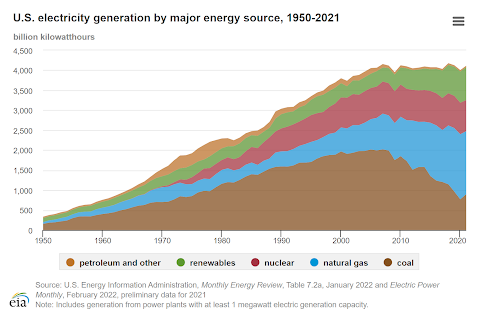
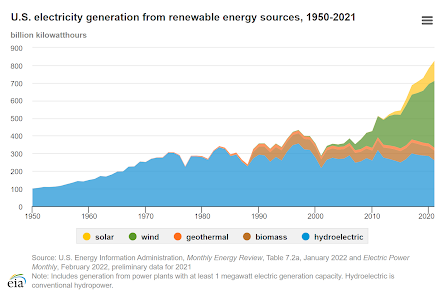


With different emphasis both reports identify potential reliability issues especially in the western United States. Temperatures have a significant impact on demand for electricity, and higher than average temperatures are expected for the coming summer. The U.S. National Oceanic and Atmospheric Administration (NOAA) forecasts for June 2022 through September 2022 suggest a 50% to 80% likelihood of higher-than-average temperatures.

Drought conditions also create heightened reliability risk for the summer. Drought exists or threatens wide areas of North America especially the west currently in the grips of an unpresented drought. Dry hydrological conditions threaten the availability of hydroelectricity for transfers throughout the Western Interconnection, and will reduce the availability of hydroelectric power in total. Hydroelectric power is the most reliable of the renewable options in the northwest and California plans for the availability to purchase that power when their own generation is inadequate. However, they do not purchase the rights to that power in advance of need.  
Drought Monitor May 24, 2022

Natural gas prices for summer 2022 are expected to rise across the U.S. The futures contract price at the Henry Hub is averaging $7.06 per million British thermal units (MMBtu) for June 2022 through September 2022, up 88% from last summer’s average price of $3.75/MMBtu. Furthermore, demand for natural gas is expected to increase 4.8% over summer 2021 levels to 89.8 billion cubic feet per day due to increases in Industrial, Residential/Commercial, power generation, and net export of natural gas.

This is summer demand when natural gas is not used for heating.


The western U.S. continues to face extreme drought conditions, increasing the likelihood of significant wildfires and reducing the amount of hydropower available. Another risk to the reliability of electrical power is the potential for wildfire. The risk of wildfires may require transmission operators to proactively shut down power in areas of active fires, or during extreme heat and wind conditions to reduce the likelihood of electric equipment sparking fires.

The low reservoir and snowpack levels indicate that the West will see less hydropower as less water is available to move through generators and as reservoir water levels fall below those necessary to operate generation equipment safely. As of May 11, 2022, after below-normal accumulations all winter, late spring storms have brought snowpack levels in the Pacific Northwest above normal, while California’s snowpack level stands at just 22% of normal for this time of year. Everything will have to go right for the electrical grid to function normally all summer. Let's hope.

Thursday, August 23, 2012

EPA Rule Targeting Coal Power Plants Voided by Court

On Tuesday the U.S. Court of Appeals for the District of Columbia ruled (2-1) that the Cross State Air Pollution Rule, CSAPR, exceeded the U.S. Environmental Protection Agency’s authority by requiring some state to clean up more than their fair share of pollution. CSAPR defined each State’s emissions reduction goals and the Federal Implementation Plans to obtain those goals at the State level. However, the EPA had used computer modeling to generate emissions “budgets” for each upwind State without regard for the amount of pollution each state was contributing to a downwind problem, but based instead on the cost of remediation. The EPA was requiring the level of cleanup to be based on cost and requiring more work to be done where the cost of capturing a ton of sulfur-dioxide and nitrogen-oxide was the lowest creating a pollution trading system.

CSAPR, requiring reductions of sulfur-dioxide and nitrogen-oxide emissions in coal fired plants, was intended to have gone into effect on January 1, 2012, but the U.S. Court of Appeals District of Columbia Circuit granted a stay to the implementation of the CSAPR pending resolution of the legal challenges. Now the Court of Appeals has found the rule exceeded EPA authority. CSAPR, if it had been implemented would have reduce SO2 emissions by 73% from 2005 levels and NOx emissions by 54% at the approximately 1,000 coal fired electrical generation plants in the eastern half of the country. This rule was intended to help downwind states attain the 24-Hour and/or Annual PM2.5 National Ambient Air Quality Standards (NAAQS) and the 1997 8-Hour Ozone NAAQS. CSAPR would have replace EPA's 2005 Clean Air Interstate Rule (CAIR) which will now remain in effect. Both these rules are intended to allow states to better control their particulate pollution.

According to the Lung Association, the two biggest air pollution threats in the United States are ozone and particle pollution. Other pollutants include carbon monoxide, lead, nitrogen dioxide, sulfur dioxide and a variety of toxic substances including mercury that appear in smaller quantities. The EPA requires states to monitor air pollution under the NAAQS to assess the healthfulness of air quality and ensure that they meet minimum air quality standards. One standard of NAAQS is particulate pollution of 2.5 micrometers or less called PM2.5. Combustion engines and coal burning power plants are key contributors to PM2.5 particles, and according to the US EPA and World Health Organization, the smaller, finer pollutants measured by PM2.5 are especially dangerous for human health. Studies have shown that people are at increased risk of asthma, lung cancer, cardiovascular problems, birth defects and premature death from particles smaller than 2.5 microns in diameter that lodge deep in the lungs.

CASPR was intended to prevent pollution from one state from moving into other states and preventing them from meeting their air quality goals. Several states have been unable to meet the current particulate standard. PM2.5 particles can be either directly emitted or formed via atmospheric reactions. Primary particles are emitted from cars, trucks, and heavy equipment, as well as residential wood combustion, forest fires, and agricultural waste burning. The main components of secondary particulate matter are formed when pollutants like NOx and SO2 react in the atmosphere to form particles.

Currently, under the Clean Air Act the US EPA has established both annual and 24-hour PM2.5 air quality standards (as well as standards for other pollutants). The annual standard is 15 ug/m3 (an air quality index, AQI of 49). The 24-hr standard is 35 ug/m3 (an AQI of 99). In June of 2012 EPA announced that they are proposing stricter air quality particulate standards to go into effect in December 2012. The standard is anticipated to be 12-13 ug/m3. According to American Lung Association State of the Air Report, Pittsburgh, PA had the highest particle pollution in the nation on an annual basis. Seven cities averaged particulate levels higher than the 15 ug/m3 current standard allows: Bakersfield, CA; Hanford, CA; Los Angeles, CA; Visalia, CA; Fresno, CA; Pittsburgh, PA; and Phoenix, AZ. The American Lung Association in their latest report states that twenty cities actually have average year-round particle pollution below the current regulated level, but above the proposed EPA air quality standard of 12-13 ug/m3. The maximum 24 hour standard will remain unchanged at 35 ug/m3. While particulate pollution remains a problem the EPA has not been able to address the problem by regulation targeted at coal fired power plants.

The earth’s atmosphere is interconnected. That is accepted when it comes to carbon dioxide, but it also applies to industrial pollutants and soot. The EPA has estimated that just one-quarter of U.S. measured pollution emissions from coal-burning power plants are deposited within the contiguous U.S. The remainder enters the global cycle. Conversely, current estimates are that less than half of all measured coal pollution emissions deposited within the United States comes from American sources. According to the Mount Bachelor Observatory, Chinese exports include acid rain that falls in China, Korea, and Japan, and pollutants that enter the air stream including sulfates, NOx, black carbon, soot produced by cars, stoves, factories, and crop burning.

Thursday, March 29, 2012

Carbon Dioxide Limit for New Power Plants


On Tuesday the US Environmental Protection Agency (EPA) proposed the first Clean Air Act standard for carbon dioxide. Under the new rule, new power plants will have to emit no more than 1,000 tons of carbon dioxide per megawatt-hour of energy produced. That standard effectively changes the fuel of choice for all future power capacity additions to natural gas, nuclear, or the renewable category (with government subsidies). All existing plants and currently permitted and built in the next 12 months will be grandfathered and exempt from this new rule. According to the EPA a coal plant currently produces about 1,800 pounds of carbon dioxide per megawatt-hour of electricity. EPA says the rule that requires new plants to produce no more than 1,000 pounds of carbon dioxide per megawatt-hour as creating “a path forward for new technologies to be deployed at future facilities that will allow companies to burn coal, while emitting less carbon pollution.” Nonsense, there is no proven commercial technology that can meet this carbon standard for coal fired plants. EPA intends that the current crop of coal fired power plants will be the last.

During the past year, EPA finalized two regulations that were specifically targeting coal fired power plants. The Mercury and Air Toxics Standards (MATS) regulates mercury, arsenic, acid gas, nickel, selenium, and cyanide. MATS was finalized on December 21. 2011. The Cross-State Air Pollution Rule, CSAPR, which requires reductions of sulfur-dioxide and nitrogen-oxide emissions in coal fired plants, was made final in July but at the end of last year, the U.S. Court of Appeals District of Columbia Circuit granted a stay to the implementation of the CSAPR pending resolution of the legal challenges. The case is scheduled to be heard in mid-April 2012. CSAPR, if eventually implemented will reduce SO2 emissions by 73% from 2005 levels and NOx emissions by 54% at the approximately 1,000 coal fired electrical generation plants in the eastern half of the country.

Our modern society requires power and the new regulation by grandfathering the existing power plants ensures that we will not be sitting in the dark any time soon. In the U.S. in 2010 over 90% of electrical power was produced by steam turbines powered by coal, oil, gas, and bio fuels. Wind and water may be used to spin the turbines as well. In 2010 Coal produced 45 % of electricity, nuclear power generated 20% of the electricity used, natural gas generated 24% of the electricity used, hydroelectric generated 6%, wind 1% and oil, wood, biomass, geothermal solar and other generated the rest. The Mercury and Air Toxics Standards and the Cross-State Air Pollution Rule will reshape the industry reducing coal fired plants. The new source carbon dioxide rule will ensure that any additional electrical capacity built will not be coal and MATS and CASPR will reduce the existing capacity of coal produced electricity. There will be impacts to the economy and our society to the reduction in demand for coal in the United States, the costs to convert, replace and upgrade power plants, and increasing the demand for natural gas which appears to be at this moment the fuel of choice.

In 2010, U.S. coal production was 1,050 million metric tons with 92.5% of the coal used to generate electricity. Without electrical generation there is little demand for coal and coal miners. The EPA’s MATS and CSPAR regulation and the greenhouse gas regulations will reduce and possibly someday eliminate the economic feasibility of coal fired electrical generation plants. However our nation requires power, and the current coal fired power plants will continue to need coal for the short term. The use of coal to generate electrical power has an interesting history. There was a time when petroleum was widely used for electrical generation. In an attempt to regain energy independence after the gas rationing and oil shortages of the 1973 Oil Embargo, the nation turned to its vast coal reserves. Between 1973 and 1976, coal production increased by 14.4%. In 1978, the Power Plant and Industrial Fuel Use Act mandated conversion of most existing oil-burning power plants to coal or natural gas. Thought the act was repealed in 1987, the impact on our nation and its economy extends to today, though the goals and values of our government have changed. Now the EPA is reshaping the future, clearly away from coal though the impacts on our environment and economy intended and any unintended are yet to be seen.

Looking at the economy as a whole and not just the electrical power sector, in 2010 the major energy sources in the United States are petroleum-gas and oil (37%), natural gas (25%), coal (21%), nuclear (9%), and renewable energy primarily biomass and hydro power generation (8%). The United States only produces about 75% of the energy we consume, the shortfall is imported petroleum. The major users of energy in the United States are heating of residential and commercial buildings (11%), industry (20%), transportation including cars, trucks, trains, planes and ships (27.4%), and electric power generation (40%).

Natural gas appears to be the current fuel of choice. It is the source of 25% of the energy consumed in the United States and in 2010 was used almost equally for industry, electrical generations and residential and commercial heating. Most, but not yet all, of the natural gas consumed in the United States is produced in the United States. Domestic natural gas production and consumption were nearly in balance through 1986, though U.S. production of natural gas peaked in 1973. From 1986 to 2006 consumption of natural gas outpaced domestic production, and imports rose. Then in 2006 U.S. production of natural gas began to increase as a result of the development of more efficient and cost effective hydraulic fracturing techniques. In 2010 natural gas production in the United States reached the highest recorded annual total since 1973 and continues to climb. Regulation and control of hydraulic fracturing will impact the cost of natural gas production in the United States, the availability of gas and the environmental impact to our natural resources.

The earth’s atmosphere is interconnected. The EPA has estimated that just one-quarter of U.S. mercury emissions from coal-burning power plants are deposited within the contiguous U.S. The remainder enters the global cycle. Conversely, current estimates are that less than half of all mercury deposition within the United States comes from American sources. Worldwide CO2 emissions are up 6%, to over 30 billion tons, in 2010 40% above the 1990 level. As you can see above the increase in CO2 emissions in the United States was far more modest, increasing 8% over 19 years. The worldwide level of CO2 is higher than the worst-case scenario outlined by climate experts just five years ago, but temperatures have not (yet) risen as projected by the climate models. The relationship of climate change to worldwide CO2 levels may not be the one assumed in the climate models. Nonetheless, the EPA continues to work diligently to achieve President Obama’s commitment in Copenhagen to reduce United States emissions of CO2 17% by 2020.

Monday, January 16, 2012

Emissions of Carbon Dioxide in the United States


Last Wednesday, the U.S. EPA released the list of facilities that emitted the most carbon dioxide in 2010. This is in preparation for later this year when the U.S. EPA is expected to promulgate new carbon dioxide standards for power plants. Power plants accounted for more than half of the greenhouse-gas emissions by the major emitters on the list, with refineries and chemical facilities also contributing large shares. Of the 100 largest emitters—defined by the EPA as facilities emitting more than 7 million metric tons of carbon dioxide equivalent—96 of them are power plants. Two are refineries and two are iron and steel mills. (Using government respiration data for mine collapse survival, the population of the United States emitted 170 million metric tons of CO2 by breathing last year.)

According to the United States the US Energy Information Administration that collects and reports the energy statistics, U.S. energy related carbon dioxide emissions in the United States totaled 5,426 million metric tons in 2009 (the most recent year available) down from a peak of 6,022 million metric tons in 2007. For the past ten years electrical generation accounted for approximately 40% of the carbon dioxide emissions in the United States, up from 36% in 1990 when industrial sources accounted for a larger share of the economy and significantly higher share of CO2 emissions.

EPA launched the Greenhouse Gas Reporting Program in October 2009, requiring the reporting of carbon dioxide data from large stationary emission sources, as well as suppliers of fuel that would emit GHGs if used. This is the first year that data was reported. Though EPA uses the term greenhouse gasses in their press release and program title they are only talking about carbon dioxide, though the main greenhouse substances in the earth's atmosphere are water vapor and clouds. Carbon dioxide represents less than 0.04% (386 parts per million) of the atmosphere and its significant increase over the past hundred years or so is attributed to man’s impact on earth. The other greenhouse gasses are methane (1.8 parts per million), nitrous oxide (0.3 parts per million), hydrofluocarbons (0.00025 parts per million), Perfluorocarbons (0.00086 parts per million), and sulfur hexafloride (0.000006 parts per million). The Greenhouse Gas Reporting Program (GHGRP) does not represent total U.S. emissions, only the major point sources, what EPA calls stationary sources.

The largest carbon dioxide generators on the U.S. EPA list are generally speaking the largest stationary combustion sources, the largest electrical generation plants followed by large industrial furnaces (iron and steel making and refineries that flair excess gas) that were built during the era of massive size plants and do not necessarily reflect how efficient, clean or dirty a plant is. The amount of carbon dioxide released is a function of the size of facility and the type of fuel used. According to a combined report from the U.S. EPA and the Department of Energy, coal generates 2.1 pounds of CO2 per kWh while natural gas generates 1.3 pounds of CO2 per kWh. The major users of fuel are heating of residential and commercial buildings (11%), industry (20%), transportation including cars, trucks, trains, planes and ships (27.4%), and electric power generation (40%).

The largest stationary sources of CO2 are large power plants. Coal fired power plants are with the exception of nuclear power the largest electrical generation plants, and coal which generates 38% more carbon dioxide when burned than natural gas. Ninety-two and a half percent of the coal mined in the United States is used to generate 45% of the electricity produced in the United States. To protect the environment and meet the President Obama’s pledge to reduce U.S greenhouse gas emissions to 17% below the 2005 levels by 2020 the U.S. EPA wants to eliminate coal as a fuel source for electrical power plant generation through increasing regulation of coal fired electrical generation plants and new millage and emission standards mandated for the automobile industry.

The Mercury and Air Toxics Standards (MATS) regulates mercury, arsenic, acid gas, nickel, selenium, and cyanide. MATS was finalized on December 21. 2011. This regulation will slash emissions of these pollutants primarily from coal fired electrical generation plants. According to the EPA it will cost $9.6 billion annually to comply with the MATS regulations and Industry analysts believe that 10% to 20% of U.S. coal-fired generating capacity will be shut down by 2016. The combined benefit of MATS and the Cross State Air Pollution Rule was estimated by the U.S. EPA to total over decades up to $380 billion in the form of longer, healthier lives and reduced health care costs.

The Cross-State Air Pollution Rule, CSAPR, which requires reductions of sulfur-dioxide and nitrogen-oxide emissions in coal fired plants and is estimated to cost $2.4 billion in annual costs. CSAPR was made final in July but at the end of last year, the U.S. Court of Appeals District of Columbia Circuit granted a stay to the implementation of the CSAPR pending resolution of the legal challenges. CSAPR, if eventually implemented will reduce SO2 emissions by 73% from 2005 levels and NOx emissions by 54% at the approximately 1,000 coal fired electrical generation plants in the eastern half of the country.

Now the U.S. EPA is preparing for the release later this year of CO2 regulations for power plants by releasing the list of industrial CO2 emitters. Electrical generation and automobiles and trucks account for 74% of the carbon dioxide emissions in the United States. Last summer the U.S. Environmental Protection Agency (EPA) and the Department of Transportation’s National Highway Traffic Safety Administration (NHTSA) finalized the new millage and emission standards for automobiles and light trucks for model year 2012 through 2016. The EPA GHG standards require these vehicles to meet an estimated combined average emissions level of 250 grams of carbon dioxide (CO2) per mile in model year 2016, equivalent to 35.5 miles per gallon (mpg).

Since 1990 global CO2 emissions have gone from 21 billion tons of CO2 to 29 billion tons of CO2 in 2009 according to data from the International Energy Agency (IEA). Global emissions of CO2 increased 38% despite a 14.7% decrease below their 1990 level for the Kyoto Participants and the United States increased of about 7% above 1990 levels. The bulk of the increase has come from China, Africa, Middle East, India and the rest of Asia. The United States and 35 Kyoto participants represent less than half the world CO2 emissions and that is shrinking every year. Now the United States appears on track to reduce their CO2 emissions over 1% below their 1990 levels and fulfill the promise that President Obama made at the Copenhagen meeting in 2010 when the President pledged to reduce U.S greenhouse gas emissions to 17% below the 2005 levels by 2020.

Monday, December 26, 2011

EPA Mercury Air Standards and Electrical Power in the United States


On Wednesday, December 21, 2011 the U.S. EPA released the final regulation for controlling mercury, and other toxic emissions from coal fired power plants. The Mercury and Air Toxics Standards (MATS) regulates mercury, arsenic, acid gas, nickel, selenium, and cyanide. The standards will slash emissions of these pollutants primarily from coal fired electrical generation plants. This should not be confused with the Cross-State Air Pollution Rule, which requires reductions of sulfur-dioxide and nitrogen-oxide emissions in 23 Eastern and Midwestern states beginning next year, as well as seasonal ozone reductions in 28 states. Combined these two rules will have a significant impact on the future cost and availability of electrical power in the United States and should be part of a careful and well thought out and communicated environmental and energy plan for the nation.

According to the EPA it will cost $9.6 billion annually to comply with the MATS regulations and Industry analysts believe that 10% to 20% of U.S. coal-fired generating capacity will be shut down by 2016. According to the EPA, the two rules together are estimated to prevent up to 46,000 premature deaths, 540,000 asthma attacks among children, 24,500 emergency room visits and hospital admissions. “The two programs are an investment in public health that will provide a total of up to $380 billion in return to American families in the form of longer, healthier lives and reduced health care costs. “The EPA did not give an estimated combined cost of the two rules; however, the Edison Electric Institute, an industry trade group, claims the combined new rules will cost utilities up to $129 billion and eliminate one-fifth of America's coal electrical generating capacity.

In 2010 coal was used to product 45 % of electricity while oil was used to generate less than 1% of electricity, so the MSTS rule is intended for coal plants. The nation's coal-fired power plants were built as the nation grew and industrialized in the first half of the 20th century when coal was the most abundant and cheapest available fuel. With the existing power plants in place coal is still much cheaper than natural gas for generating electricity, but the tightening of regulations by EPA under the Mercury and Air Toxics Standards and the Cross-State Air Pollution Rule (even with recent modifications) will decrease that financial advantage because coal burns dirtier than natural gas. In addition, the recent availability of shale gas has lowered the cost of natural gas and provided a potentially reliable supply.

These new regulations will require existing plants to meet emission standards that are at least as stringent as the top 12% best-performing coal facilities and may force some plants to convert to natural gas fuel or to shut down entirely. The generating capacity will have to be replaced with new plants that burn cleaner fuels and produce less pollution, but the cost of power will increase. Several state utility commissioners say they fear the agency's recent rules will push up electricity prices or could even hurt electric-system reliability if too many power plants are shut down. That is countered by the EPA who states that less than 1% of the national generating capacity will be lost.
According to EPA there are about 600 power plants covered by these standards. They emit harmful pollutants including mercury, non-mercury metallic toxics, acid gases, and organic air toxics including dioxin.

Our modern society requires power - that is not going to change. The cost of power is a key factor in determining the cost of production, and the cost of living. In the U.S. in 2010 over 90% of electrical power was produced by steam turbines powered by coal, oil, gas, and bio fuels. Wind and water may be used to spin the turbines as well. Coal produced 45 % of electricity, nuclear power generated 20% of the electricity used, natural gas generated 24 % the electricity used, hydroelectric generated 6%, wind 1% and oil, wood, biomass, geothermal solar and other generated the rest. The Mercury and Air Toxics Standards and the Cross-State Air Pollution Rule will reshape the industry reducing coal fired plants, but some fuel will need to be used to spin the turbines. In all probability natural gas will be substituted for coal. There will be economic impacts to the reduction in demand for coal in the United States, the cost to convert, replace and upgrade power plants, and increasing the demand for natural gas.

Natural gas is the cleanest of the fossil fuels. Burning natural gas in the place of coal emits fewer harmful pollutants, but methane, the principle component of natural gas, is itself a potent greenhouse gas. Methane has an ability to trap heat almost 21 times more effectively than carbon dioxide. This past year researchers at Carnegie Mellon University compared greenhouse gas emissions from the Marcellus Shale region with emissions from coal used for electricity generation. The authors found that natural gas from the Marcellus shale had lower life cycle greenhouse gas emissions than coal for production of electricity by 20–50% depending upon plant efficiencies and natural gas emissions variability. Shale sourced natural gas could provide a reliable source of natural gas for our nation in this century and might make the conversion of some power generation worthwhile. However, before we push a significant portion of our electrical generating capacity from coal to natural gas, we should ensure that we will have the natural gas supplies available at the time and location that it is needed to produce a reliable electrical grid.

Thursday, October 13, 2011

EPA Air Rules and Power Generation in the United States

Our modern society requires power and that is not going to change. The cost of power is a key factor in determining the cost of production, and the cost of living. Although power plants are regulated by federal and state laws to protect human health and the environment, there is a wide variation of environmental impacts associated with power generation technologies. In the U.S. natural gas is used to produce 21 % of its electricity. Coal is used to product 48 % of electricity. With the existing power plants in place coal is still much cheaper than natural gas for generating electricity, but the tightening of regulations by the EPA under the Clean Air Act of coal powered generating plants for carbon emissions, mercury, arsenic, acid gases and the Cross-State Air Pollution Rule (even with recent modifications) will decrease that financial advantage because coal burns dirtier than natural gas.

The nation's coal-fired power plants were built as the nation grew and industrialized in the first half of the 20th century when coal was the most abundant and cheapest available fuel. The coal burning power plants emit 48 tons of mercury annually as well as particulates and other pollutants. According to the EPA, Mercury can cause neurological disorders in children and the mercury emissions from power plants pose "significant hazards to public health" and must be reduced. By forcing the plants to curb emissions of mercury, arsenic and acid gases, the EPA says it can prevent as many as 17,000 premature deaths a year caused by breathing air laced with coal-fueled pollution. These new regulations will require existing plants to meet emission standards that are at least as stringent as the top 12% best-performing coal facilities and may force some plants to convert to natural gas fuel or to shut down entirely. The generating capacity will have to be replaced with new plants that burn cleaner fuels and produce less pollution, but the cost of power will increase.

The mercury, arsenic, and acid gas regulations should not be confused with the Cross-State Air Pollution Rule which is a separate set of EPA regulations, aimed at slashing smokestack emissions that can travel into neighboring states, and were recently changed to allow 10 states (notably Texas who sued the EPA), to emit more smog-causing pollution than had initially been permitted. The change will allow the 10 states to emit 76,000 tons more pollution (70,000 tons will come from Texas) or about 2% of the total pollution the EPA will regulate under this new rule. The rule is designed to decrease smokestack emissions, mostly from coal-fired power plants, in 27 states, that contribute to unhealthy air downwind and is expected to prevent up to 34,000 untimely deaths and combined with the other rules will prevent 51,000 premature deaths, but the cost in terms of increased electrical rates, jobs and lives disrupted by unemployment and diminished economic opportunity. The recent changes give more leeway to the dirtiest facilities, but the EPA explains that the change was made because it became apparent that air stack scrubbers were not as efficient as initially assumed in the EPA’s first version of the Cross-State Air Pollution Rule. Nonetheless, the primary impact of the new rules will be on coal-fired plants more than 40 years old that have not yet installed state-of-the-art pollution controls. Many of these plants are inefficient and will be replaced by more efficient combined cycle natural gas plants. Edison Electric Institute, an industry trade group, claims the combined new rules will cost utilities up to $129 billion and eliminate one-fifth of America's coal capacity.

Natural gas is the cleanest of the fossil fuels. Burning natural gas in the place of coal emits fewer harmful pollutants. Methane, the principle component of natural gas, is itself a potent greenhouse gas. Methane has an ability to trap heat almost 21 times more effectively than carbon dioxide. This year researchers at Carnegie Mellon University compared greenhouse gas emissions from the Marcellus Shale region with emissions from coal used for electricity generation. The authors found that natural gas from the Marcellus shale had lower life cycle greenhouse gas emissions than coal for production of electricity by 20–50% depending upon plant efficiencies and natural gas emissions variability. Shale sourced natural gas could provide a reliable source of natural gas for our nation in this century and might make the conversion of some power generation worthwhile. However we need to remember that the gas still is a limited resource and be cautious about what other impacts fracking might have on our other resources especially water. At least in the medium term the environmental impact from power generation will be determined by the efficiency and care of how fuel is obtained, transported, generated and used. Improving efficiency is the low lying fruit that can have an immense impact and should not be ignored while we are busy dreaming of the someday world of renewable energy. Natural gas from shale rock is plentiful in North America. Despite billions of dollars in DOE solar generation loan guarantees the generating capacity of solar power in the nation will continue to be under 3% of power generation.